Apple continues to expand its smartphone lineup with powerful devices designed for different types of users. iPhone 17e vs iPhone 17 512GB Comparison helps buyers understand the main differences between these two models before making a purchase decision. While both smartphones come with Apple’s latest technology, they target different price segments and offer slightly different features.
In this comparison, we look closely at their build quality, displays, processors, camera systems, connectivity, and battery performance. The goal is to help you quickly understand how these devices differ and which one may suit your needs better. Below you can check the detailed comparison table, followed by a complete explanation of each specification category.
Accelerometer, Barometer, Compass, Face ID, Gyro, Proximity
Accelerometer, Barometer, Compass, Face ID, Gyro, Proximity, Ultra Wideband (UWB) support (gen2 chip), Emergency SOS, Messages, and Find My via satellite
Audio
Lightning to 3.5 mm headphone jack adapter, Speaker Phone
Emergency SOS, Messages, and Find My via satellite, Glass front (Ceramic Shield), glass back, aluminum frame, IP68 (6m for 30 min), Apple Pay
Glass front (Ceramic Shield 2), aluminum frame, glass back, IP68 (6m for 30 min), Apple Pay
Battery
Capacity
4005 mAh
Li-ion 3692 mAh
Charging
Fast battery, Wired, 50% in 30 min, 25W wireless MagSafe
Fast battery Wired, PD2.0, 50% in 20 min, 25W wireless MagSafe/Qi2, 4.5W reverse wired
Build and Design
In terms of build quality, both the iPhone 17e and iPhone 17 offer premium materials and solid construction. The iPhone 17e runs iOS 26.3, while the iPhone 17 runs iOS 26. Both devices support Nano-SIM and eSIM, allowing users to manage multiple networks easily.
The iPhone 17 comes with a compact design measuring 149.6 x 71.5 x 8 mm and weighing 177 grams, making it comfortable to hold. The dimensions of the iPhone 17e are not officially listed yet, but it still features a strong build with a glass front, glass back, and aluminum frame.
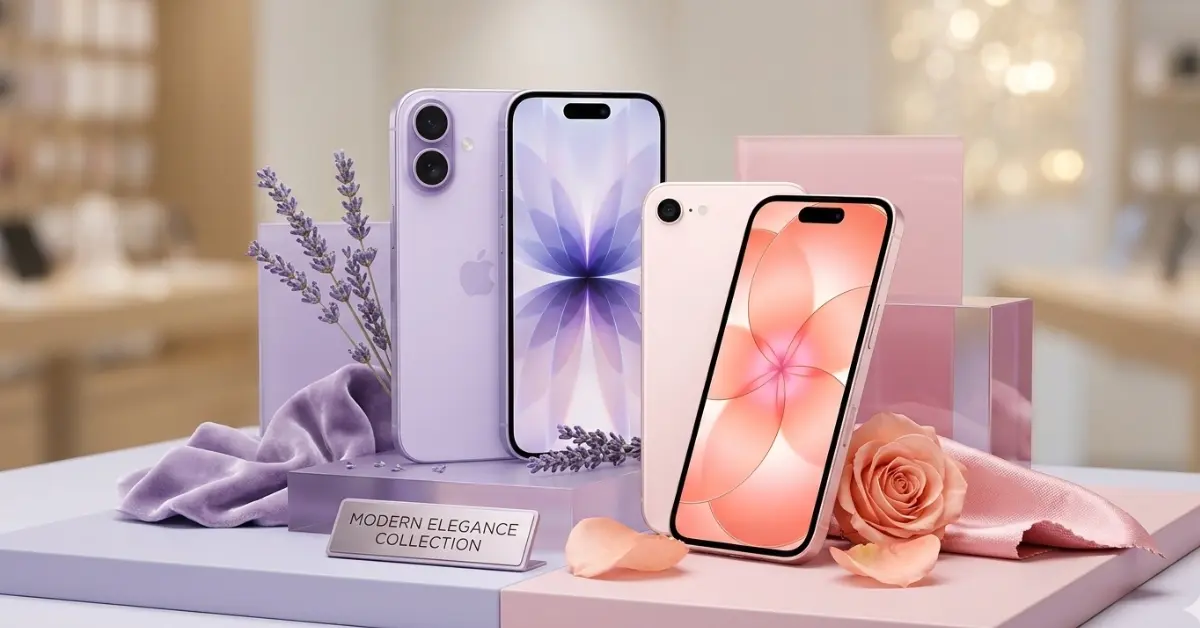
When it comes to color options, the iPhone 17e is available in Black, Silver, and Purple, while the iPhone 17 offers more variety with Black, White, Mist Blue, Sage, and Lavender.
Network and Frequency Support
Both devices support a wide range of network bands. They include 2G, 3G, 4G LTE, and 5G connectivity, ensuring reliable internet speeds and strong signal compatibility across different regions.
The phones also support SA/NSA/Sub-6 5G bands, which means users can enjoy high-speed mobile internet where 5G networks are available.
Overall, there is no major difference in network capability between the two models.
Processor and Performance
Performance is one of the strongest aspects of both phones. The iPhone 17e and iPhone 17 are powered by the Apple A19 chipset built on a 3nm process, which delivers excellent efficiency and high processing power.
Both devices use a Hexa-Core CPU, but the iPhone 17 has a slightly higher clock speed of 4.026 GHz. In terms of graphics performance, the iPhone 17 uses a 5-core Apple GPU, while the iPhone 17e features a 4-core Apple GPU.
This difference may provide a slight advantage to the iPhone 17 in gaming and heavy graphics tasks, but everyday performance should remain smooth on both devices.
Display Comparison
Display quality is another area where these devices differ slightly. The iPhone 17e comes with a 6.1-inch Super Retina XDR OLED display with a resolution of 1170 x 2532 pixels. It also supports HDR10 and brightness levels up to 1200 nits peak.
The iPhone 17 offers a slightly larger 6.3-inch LTPO Super Retina XDR OLED display with a 120Hz refresh rate, making scrolling and animations smoother. It also delivers higher brightness levels, reaching 3000 nits peak brightness.
Additionally, the iPhone 17 features Ceramic Shield 2 protection with an anti-reflective coating, giving it a stronger and more advanced display protection.
Memory and Storage
Both smartphones offer fast storage using NVMe technology. The iPhone 17e comes with multiple storage options including 128GB, 256GB, and 512GB with 8GB RAM.
The iPhone 17 model listed here provides 512GB internal storage with 8GB RAM, making it suitable for users who need a large amount of storage space for apps, photos, and videos.
Neither device supports external memory cards, which is typical for Apple smartphones.
Camera Comparison
Camera performance is an important factor for many users. The iPhone 17e features a 48MP main wide camera with PDAF and OIS, capable of capturing detailed photos and smooth videos.
The iPhone 17 offers a dual-camera setup consisting of a 48MP main camera and a 48MP ultrawide lens. This extra lens allows users to capture wider shots and more creative photography.
For selfies, both devices include an 18MP front camera with advanced features like HDR and Dolby Vision video recording, ensuring high-quality video calls and selfies.
Connectivity Features
Connectivity options are strong on both devices. The iPhone 17e supports Wi-Fi 6, Bluetooth 5.3, and USB Type-C connectivity.
The iPhone 17 has slightly more advanced connectivity with Wi-Fi 7 support, Bluetooth 6.0, and USB Type-C with DisplayPort capability.
These improvements make the iPhone 17 more future-ready, especially for faster wireless connections and external display support.
Additional Features
Both smartphones include essential sensors such as Face ID, accelerometer, gyroscope, compass, barometer, and proximity sensor.
The iPhone 17 adds some extra features such as Ultra Wideband (UWB) support with a second-generation chip, which improves location tracking and device connectivity.
Both devices also support satellite communication features like Emergency SOS and Find My, adding extra safety and communication options.
Battery and Charging
Battery performance is another important comparison point. The iPhone 17e comes with a 4005 mAh battery, which is slightly larger than the 3692 mAh battery inside the iPhone 17.
Both phones support fast wired charging and MagSafe wireless charging. The iPhone 17 can charge up to 50% in around 20 minutes, while the iPhone 17e reaches 50% in about 30 minutes.
The iPhone 17 also includes reverse wired charging, which allows it to share power with other devices.
Conclusion
The iPhone 17e vs iPhone 17 512GB comparison shows that both smartphones are powerful and feature-rich devices. The iPhone 17e offers a strong combination of performance, storage options, and battery capacity, making it a great option for users who want a capable iPhone at a lower price.
On the other hand, the iPhone 17 provides additional advantages such as a 120Hz display, a dual camera system, faster connectivity, and extra features like UWB support. These upgrades make it a better choice for users who want the most advanced experience.
Choosing between the two models mainly depends on your budget and the features that matter most to you.